Did Tchaikovsky’s Music Come From Experience?

By Preston Griffith

Could Tchaikovsky’s work have been taken from his own lived experience?  To make a direct connection from his life experience to his compositions would be considered a biographical fallacy.  Craig White, professor of Literature at University of Houston Clear Lake, defines the Biographical Fallacy as “the belief that a work of fiction or poetry must directly reflect events and people in the author’s actual experience.” If meaning were assigned to Tchaikovsky’s work only in relation to his life, then why would anyone want to listen to his music? In fact, many writers create characters whose thoughts and actions are completely at odds with their own.  Making a direct connection to the author/composer’s life would only be a correlation the majority of the time, and that may be interesting itself, but without solid evidence from the original source explicitly showing the intent of the author, scholars will never be certain.

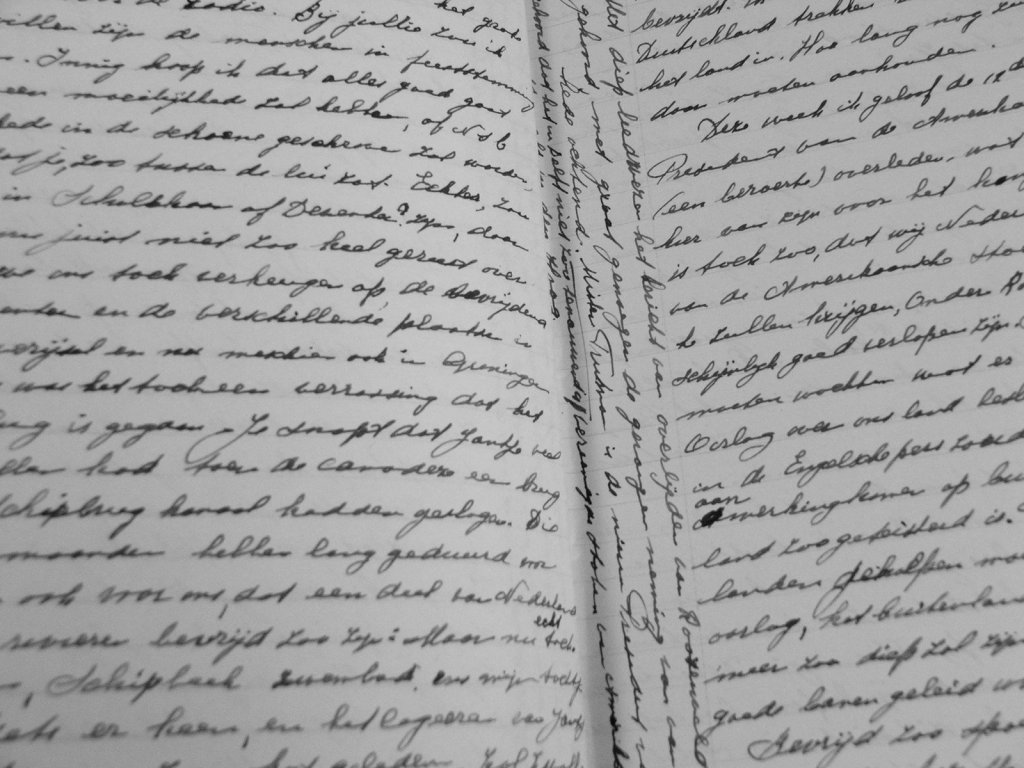
Tchaikovsky’s diary is often used as a source to find the relationship between his life and work.  For instance, within his diary from April, 1884 to June, 1884, Tchaikovsky describes the events of everyday life, although much of his account is not usable. There are many unnecessary details that do not help music scholars as Tchaikovsky put so much detail into his diary, and much of what he said was simply observation.  Many of these observations expressed his opinions, or at least implied them, but a large amount of them were unbiased accounts of the events that happened throughout the day. It may well be argued that there is so much detail in Tchaikovsky’s diary that the possible motivations or reasons for the creation of a composition are much harder to pinpoint.

The diary shows the events of Tchaikovsky’s life in 1884 on the estate owned by his brother-in-law and sister, Lev and Alexandra Davidov, at Kamenka in the province of Kiev.  At the time, he was in the midst of composing his Third Suite for Orchestra, Op. 55.  Most of his entries describe his daily routine which consisted of a walk (on which he would come up with ideas), work, tea, spending time with Bob (his nephew), dinner with family, and reading (English to practice the language, or other books of interest).  For instance, on Sunday April 15 he wrote “Strolled in the garden and sowed the seeds not of a future symphony, but of a suite.”  This shows scholars his location at the time of his Third Suite’s conception but does not give any indication of his motivation for writing one, or anything else for that matter.

He also wrote a lot about his emotions and how they changed, but several times his anger or general change in attitude did not seem to be due to any external circumstance.  The game Whist made him angry as did some of the things his family would do or say.  After coming to dinner on April 24 and finding that it was a new arrangement, Tchaikovsky writes “I suffered from hunger and lack of attention.  It’s petty, but why conceal that even such a trifle can anger me?”  This seems to confirm that Tchaikovsky has complex emotions and he was prone to fast shifts of mood.  He also wrote a lot about the weather.  Weather is known to change the mood of a person, but Tchaikovsky seemed to be making general observations.  Perhaps it did subconsciously motivate him, but again, scholars have no direct evidence of this.  Someone who is an expert at analyzing human behavior may be able to derive some motive for Tchaikovsky’s composition based on the details provided in his diary, but this would still only be correlation. 

A diary is useful to music scholars as they learn that Tchaikovsky had a fairly normal life spent amongst family and friends and that he was not free from error.  Little hints about Tchaikovsky’s composition process are given throughout, and a scholar may be able to produce an analysis of the time spent on his compositions and the kind of work Tchaikovsky did in order to create such masterworks.  For example, he wrote “Fussed with one place in the andante until seven o’clock.” This was from the fourth movement of the suite.  In this way scholars can see how work effected Tchaikovsky’s life, but not vice versa.  There was only one clear inspiration for a composition within the diary. On the 18th of May, 1884, Tchaikovsky wrote “Played Mozart and was in ecstasy.  An idea about a suite from Mozart.”  This idea was later used to create the Fourth Suite for Orchestra, Mozartiana, written in 1887.  Tchaikovsky was enamored with Mozart’s work and would often read about him or sit and play his works.  On May 4 before he came up with the idea, he wrote “…sitting down to play Mozart’s Magic Flute in an extremely peaceful mood.” 

In conclusion, trying to make a direct connection to Tchaikovsky’s life from his music results in a Biological Fallacy.  Finding a correlation between his music and some aspect of his life may be interesting and possibly true, but as stated before, scholars will never be certain.  Perhaps music scholars may not be able to glean some details that they seek to know, but in the process of reviewing the life of such a composer, perhaps they themselves would become inspired. 

References

Tchaikovsky, Pyotr. “Diary Three: April 1884-June 1884.” Chapter 3 in The Diaries of Tchaikovsky. Trans. Wladimir Lakond. Westport, Connecticut: Greenwood Press, 1973.


White, Craig. “The Biographical Fallacy and How to Think Your Way Out of It.” University of Houston Clear Lake: Craig White’s Literature Courses. Accessed April 6, 2020. http://coursesite.uhcl.edu/HSH/Whitec/terms/B/BiographFallacy.htm

Biographical Fallacy in Music Analysis

Andrea Davis

Tchaikovsky was a prolific writer. Years of his correspondence and diary entries have given scholars insight into his life and mind. While his personal writings communicate his thoughts and moods (and even occasionally his approach to composition), they do not necessarily present a lens through which his works can be understood. It is important to recognize the value of personal accounts and biographical details, but scholars must also understand that using these facts to make critical judgements may only serve to reduce the importance of an artist’s contributions.

The process of critiquing music or art through the lens of personal information often involves “Biographical Fallacy”. Craig White, Professor of Literature at the University of Houston Clear Lake, defines Biographical Fallacy as “the belief that a work of fiction or poetry must directly reflect events and people in the author’s actual experience.” Relying on biographical details to analyze a composition can lead one to develop a narrow view or to speculate about the artist’s intentions, which limits both the work itself and its potential interpretations.

When reading the letters and diaries written by Tchaikovsky, one might draw the conclusion that he was moody, emotional, and unhappy. He wrote, “I am in some kind of seething fury,” (26 April 1884), “I was irritable and found the opportunity to act hostile,” (3 May 1884), and “I am very weary,” (4 May 1884). If used to assess his compositions, Tchaikovsky’s statements could imply that his music has an undercurrent of anger or angst. In other diary entries, Tchaikovsky describes his appreciation—and irritation—of the changing weather, and also records his personal interactions: he is extremely competitive when playing whist, and he adores his nephew, Bob Davydov. While one can argue that the details, illnesses, and moods experienced throughout life could certainly influence a composition, the idea that creativity and understanding cannot surpass one’s experience is limiting. Tchaikovsky himself addressed this idea when he wrote, “Although I have a predilection for songs of wistful sadness, yet in recent years, at least, I…do not suffer from any want and I may, in general, regard myself a happy person!”

While biographical information as a tool for analysis is inadequate, the information itself is valuable. Our understanding of timelines, personal characteristics, and historical context can be broadened with an in-depth study of biographical material. Life experiences that illuminate a composer’s thought process or approach may be helpful when trying to compile a full and more complete picture of his works. Insights into moods and personal relationships can help one see a person’s humanity. The examination and study of biographical information contributes to a more comprehensive understanding of history and better scholarship.

Tchaikovsky’s letters and diaries are valuable sources of information for scholars and musicians. Learning about his life from primary sources can only augment one’s understanding of history and historical context. However, relying on biographical information to make assumptions about his works only serves to reduce the potential impact of Tchaikovsky’s creative influence and contribution to the arts.

Bibliography

Pozansky, Alexander. “Tchaikovsky: The Man Behind the Myth.” The Musical Times 136/1826 (1995): 175-182.

Tchaikovsky, Pyotr. “Diary Three: April 1884-June 1884.” Chapter 3 in The Diaries of Tchaikovsky. Trans. Wladimir Lakond. Westport, Connecticut: Greenwood Press, 1973.


White, Craig. “The Biographical Fallacy and How to Think Your Way Out of It.” University of Houston Clear Lake: Craig White’s Literature Courses. Accessed April 6, 2020. http://coursesite.uhcl.edu/HSH/Whitec/terms/B/BiographFallacy.htm

Tchaikovsky’s Diary No. 3

With some bias and fallacies in certain literature and media, people could get the wrong impression regarding a certain topic. These fallacies, especially biographical ones, can explicate the meaning of a work of literature by asserting that it is really about events in its author’s life. With that in mind, when artists present their work to the world, there will be many interpretations of what that artist might have been going through in life when creating said work, and some people will attempt to present that as fact. Some will even say the artist’s own life had no effect on how the work was made. However, it’s important to consider the life of the artist because an event or relationship in their life, whether minor or major, would have some effect on how the work was created. In this case, Tchaikovsky’s diary can be used by scholars to better understand the connections between his life and his works.

The diary states from time to time how the weather can be a source of inspiration for artists and composers to get ideas for works, even if it is indirectly. For example, Tchaikovsky stated that on a cold April 13, after drinking some tea, he had come up with an idea for a piano concerto which would eventually materialize into the Fantasy for Piano and Orchestra, Op. 56. In some cases, the weather can be a direct source since it can alter one’s mental and/or emotional state. In the few days leading up to May 11, there were a variety of weather changes. From rainy and sunny to a thunderstorm; Tchaikovsky also had a few emotional changes from being a little less angry at the card game to being pleasant at the garden to being woken up by the thunderstorm. May 11 started off cold and windy, then it went from that to dusty at five o’ clock. This is when he decided to change the first movement of the suite (which is called contrasts) for something completely different. He struggled with it at first, but on the next day, he figured it out and worked from there. Without the diary, scholars probably would have assumed that Tchaikovsky got the ideas without any exterior inspirations.

An artist or composer can also draw inspiration from relationships with their family and loved ones. Sometimes, even the loved ones themselves will give out ideas for new works. The diary has a few examples of these moments. On the 16th of April, after being suggested an idea for a new symphony by his cousin, the seeds for a composition started being planted. This would lead not to a new symphony, but to The Third Suite for Orchestra, Op. 55. A composer can also compose something in dedication to a loved one. For example, the diary states that Tchaikovsky reunited with Bob (Vladimir Davidov’s nickname) on Sunday, April 22. Bob was Tchaikovsky’s thirteen-year-old favorite nephew whom he was very attached to from his childhood. As Bob got older, it was implied that this relationship would become more than platonic. When Tchaikovsky wrote The Sixth Symphony (Pathetique),  it was dedicated to Bob. The diary helps understand how close Tchaikovsky was to his family.

Emotions and stress can get in the way of a composition process, and the diary has a few entries demonstrating this. For example, on April 30, Tchaikovsky got angry playing cards with Sasha, and the weather was not helping to calm him down. He spent all day writing the valse melancolique for The Third Suite, but he did not feel at all that he was satisfied with it. He did not feel well that whole day while working on the Scherzo for The Third Suite for Orchestra. He also wrote on May 18 that he strains himself too much in his work and that would probably be reflected in The Third Suite.

Tchaikovsky’s diary certainly provides some useful information on how certain works of his came to be. Whether it was the weather, his relationships, or even his emotions, things in his life, major or minor, would sometimes lead to a work being created, directly or indirectly. Though the translation was done by somebody else, the diary was from Tchaikovsky himself. Besides the correspondence he shared with Von Meck, there is probably no other source to gather information that has little to no bias. A diary from any composer, including Tchaikovsky, can and definitely should be used by scholars to understand what lead to certain compositions being written.

Omar A. Cordova

Bibliography

Tchaikovsky, Pyotr. “Diary Three: April 1884-June 1884.” Chapter 3 in The Diaries of Tchaikovsky. Trans. Wladimir Lakond. Westport, Connecticut: Greenwood Press, 1973.

White, Craig. “The Biographical Fallacy and How to Think Your Way Out of It.” University of Houston Clear Lake: Craig White’s Literature Courses. Accessed Jan. 13, 2020. http://coursesite.uhcl.edu/HSH/Whitec/terms/B/BiographFallacy.htm

Yours, P. Tchaikovsky

In 1876, Nadezhda von Meck wrote to Nikolai Rubinstein with the hope that he could recommend a violinist who would join her household. She was willing to pay handsomely for the position, which also included travel and ample private practice time. Iosif Kotek, a student of Tchaikovsky’s at the conservatoire, was the violinist to accept her offer. Von Meck was familiar with Tchaikovsky’s music, and desired to have him arrange some of his compositions for piano and violin. Kotek appealed to Tchaikovsky on behalf of von Meck, and Tchaikovsky accepted the commission. After receiving her arrangements, von Meck immediately wrote a thank you note to Tchaikovsky. Tchaikovsky then wrote a prompt reply. Surely neither envisioned the enduring friendship and correspondence that these two notes began.
Though their relationship had a distinctly businesslike dimension (initially due to von Meck’s commission, and later because of her patronage), it was more of a friendship in nature. At the time their correspondence began, Tchaikovsky was beginning to feel dissatisfied at the conservatoire, was coming to terms with his homosexuality, and was considering marriage despite his inclinations. Von Meck was newly widowed, and had sought emotional comfort in an extramarital affair which produced an illegitimate child (she later learned that knowledge of her affair caused her husband’s fatal heart attack.) Both Tchaikovsky and von Meck disliked crowds and people and did their best to keep to themselves. With their emotional needs and their desire for solitude, a friendship through correspondence was likely ideal. It was doubly so for Tchaikovsky when considering her financial support. He wrote, “I owe everything, everything, to you.” It seems doubtful that he was speaking only of her patronage when he also stated that he found writing to von Meck “a source of enormous pleasure” and that it was done “to satisfy my heart’s need.” The friendship was not one sided. Von Meck wrote similar expressions of endearment, saying, “Hearing from you is not only enjoyable and precious, but also beneficial.” Tchaikovsky married Antonina Milyukova only six months after this correspondence began—the marriage lasted only two months before they separated. It was certainly serendipitous that Tchaikovsky had a friend and emotional support from von Meck during the worst time of his life. The two only referred to Antonina as “a certain personage” in their correspondence, which speaks (at least a little!) to friendly loyalty.
As one who spent her childhood pre-internet, I was an avid corresponder. I found pen-pals in cousins, friends, and even the occasional kid met at a campground. I find the letters between Tchaikovsky and von Meck charming, likely because I can relate to the desire for connection and communication with friends through written words. I love that von Meck requested a photograph of Tchaikovsky. (That is such a pen-pal thing to do!) And her response upon receiving it is delightful: “I thank you, I thank you again and again, Petr Il’ich, I clasp your hand warmly for the lovely photograph, which made me so happy that the whole world seemed to light up and warmth and lightness filled my heart. May you always be as happy as I was at that moment.”
In a letter from November 1877, Tchaikovsky apologizes for being so melancholy, but admits that he couldn’t resist writing about it to his dear friend. He details his grief and depression and mentions that once he leaves Venice he will feel better. He closes the letter with, “Farewell, much-beloved and precious friend. One day my letters will cease to be endless outpourings of grief and woe! Soon, I hope…I shall go on writing to you every time I feel the need to unburden my soul in confession.” It is the post script that speaks to my pen-pal heart: “I don’t suppose you’ll be in time to write to me in Venice, but then I’m sure I will get a letter from you in Vienna. Just in case, I’ll give you my address in Venice: Hôtel S. Gallo.” Tchaikovsky’s hope of receiving a letter, despite it being unlikely before his departure, is endearingly human.
The correspondence between Tchaikovsky and von Meck is a treasure, not least because he often describes his thought processes and composition details. However, I find the personal tone and vulnerabilities discussed between friends to be most fascinating. By all accounts, Tchaikovsky was a nice guy, and I enjoy reading their letters, knowing that he had a good friend in von Meck.

Andrea Davis

Bibliography

Brown, David. Tchaikovsky: The Man and His Music. New York: Pegasus Books, 2007.

Tchaikovsky, Pyotr, and Nadezhda von Meck. To My Best Friend: Correspondence between Tchaikovsky and Nadezhda von Meck1876-1878. Trans. Galina von Meck. Ed., Edward Garden and Nigel Gotteri. Oxford: Clarendon Press, 1993.

Wiley, Roland John. “Tchaikovsky, Pyotr Il′yich.” Grove Music Online. 2001; Accessed 28 Feb. 2020. https://0-www-oxfordmusiconline-com.lib.utep.edu/grovemusic/view/10.1093/gmo/9781561592630.001.0001/omo-9781561592630-e-0000051766.

Nadezhda von Meck and Pyotr Tchaikovsky

by Preston Griffith

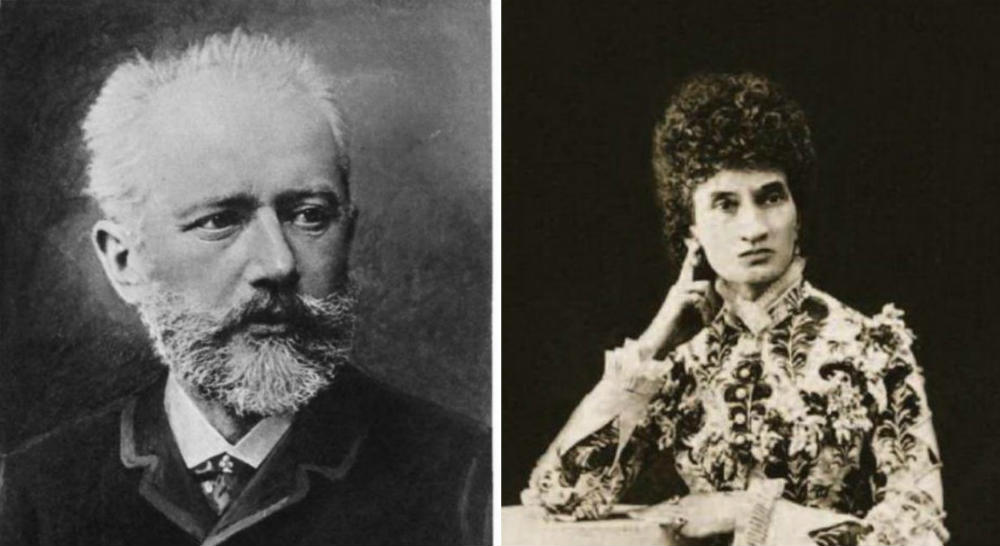
Tchaikovsky and Nadezhda von Meck

The relationship between Nadezhda von Meck and Pyotr Tchaikovsky began with correspondence in 1876. Tchaikovsky was age 36 and unmarried and had reached a turning point in his career.  He was becoming dissatisfied with his job at the Moscow Conservatory, and had previously composed his first three symphonies and orchestral works like the Romeo and Juliet Overture, as well as operas like The Oprichnik and Vakula the Smith. The two were put in contact through the recommendation of Nikolai Rubenstein, the famous pianist and conductor, and Iosif Kotek, a violinist and Tchaikovsky’s beloved former pupil. Soon after, Nadezhda von Meck displayed a great admiration for Tchaikovsky’s music and became his benefactress.

Tchaikovsky and Nadezhda von Meck very quickly became friends through their correspondence and wrote some of their innermost worries and thoughts to each other.  As early as Letter 13 Nadezhda von Meck suggested that their writing should come from an “inner urge” and not be all about “business matters”.  By Letter 33, she had asked him to “write everything” about himself.  Throughout Tchaikovsky’s marriage disaster and other bad situations, Nadezhda von Meck supported him and helped him recover.  According to Edward Garden, “Both materially and mentally, then, Tchaikovsky’s relationship with Nadezhda von Meck during the first two years or so of their correspondence was all-important for his survival.”

Nadezhda von Meck was a curious and perceptive person, and asked Tchaikovsky many questions about his compositions and opinions on the popular music of the time.  The two shared a similar taste in music, and they found comfort in each other’s thoughts regarding other composers and had intellectual conversation regarding technique and style.  They were also both nationalist, well-read, and even shared similar thoughts on religion.  Tchaikovsky enjoyed writing to Nadezhda von Meck as much as she did and wrote many a letters on subjects both trivial, and deeply philosophical.

Two letters, 13 and 178, provide a great example of the kind of relationship Tchaikovsky and Nadezhda von Meck had.  To begin with, by the 13th letter, Nadezhda von Meck had requested Tchaikovsky to write as he pleased and to be frank with her.  She expressed her admiration and gratitude for having such a friend, and this set the tone of the following letters.  In Letter 178, Tchaikovsky writes of everyday concerns that show how intimate he was with Nadezhda von Meck and he even writes about the progress of his great opera, Onegin.

Letter 13 begins with “I thank you sincerely from the bottom of my heart, most respected Petr Il’ich, for the trust and friendship you have shown me in your appeal on this matter.”  The tone is already one of admirations, and when she calls him “Petr Il’ich” she is addressing him in what is considered a polite, neutral form of address in Russia.  She continues writing about her desire for him to write “as to a close friend who loves you sincerely and deeply” and wants Tchaikovsky to allow her to write him whenever she wants to receive a letter from him.  She ends by comparing Tchaikovsky to a minister by saying “Pious people need ministers of their religion…But I need you, the pure minister of my beloved art”, and thanks him for dedicating his symphony to her. This letter is very important because it establishes Nadezhda von Meck’s desire for a deeper friendship with Tchaikovsky, and allows for their correspondence to become one of the most significant sources of information on Tchaikovsky’s life thereafter because of the wonderful resulting friendship.

In letter 178, Tchaikovsky writes about his delayed travels to Brailov, the residence of Nadezhda von Meck.  He had become sick, and has various physical ailments such as back problems, and later in the letter writes about “attacks of lethargy”. By this point in their correspondence, Tchaikovsky is free to write about trivial matters in his life and is very descriptive. Staying in Verbovka, he writes that he has spent time with his niece Anna and Brother Anatoly.  His Brother in Law’s niece had also come along and had romantic desire for Anatoly, but she was already engaged to another young man currently in school, and being tormented by these thoughts, wrote to him about it.  Some drama ensued, but Tchaikovsky thought little of it, and everything was settled in the end.

In the most important part of the letter, Tchaikovsky writes “I played through the whole of Onegin to the people here yesterday evening.  Their impressions were extremely favorable.”  Letters like these were important, because they give the reader insight into the mind of Tchaikovsky, the composer.  He goes on to say that he is afraid it is “impossible to perform” and that he is not sure what to do about the parts for Tat’ iana and Lensky. He had previously had the students of the Conservatory perform the opera as a trial run, but Tchaikovsky ultimately wanted the opera to be a well done show, and said “If the management of a theatre asks me for the opera, then I’ll be very demanding. There are lots of mistakes in the proof; I’ll have to do two proofs, but the opera will be ready by the middle or end of September.”  With this, we see how Tchaikovsky is comfortable talking about his works with Nadezhda von Meck, and because she is a musician he can delve deeper into the small details of his works.  In the end he writes that he looks forward to being at her house in Brailov, and that he is happy in Verbovka, but needs “to be without people from time to time.”

Tatiana’s Letter Scene from Eugene Onegin– an example of what Tchaikovsky’s opera would become!

From the correspondence of Tchaikovsky and Nadezhda von Meck, one can gain a clear picture of the kind of relationship they had and enjoy information on the fine details of their lives.  The two were very close friends and had a sincere love and admiration for each other. Tchaikovsky gained a benefactress, close friend, and confidant with his relationship to Nadezhda von Meck.  She helped to make him the successful composer he is known to be today.

Citations

Tchaikovsky, Pyotr, and Nadezhda von Meck. To My Best Friend: Correspondence between Tchaikovsky and Nadezhda von Meck 1876-1878. Trans. Galina von Meck. Ed., Edward Garden and Nigel Gotteri. Oxford: Clarendon Press, 1993.

Relation and Correspondence, Tchaikovsky to von Meck

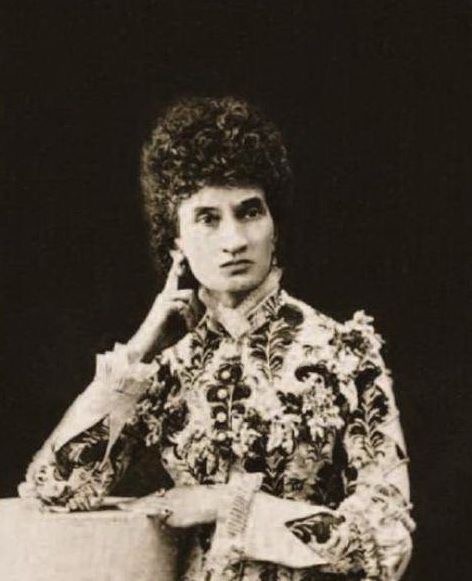
M. F. Von Meck

By Aníbal Acevedo

Besides his mother, there were two other important women in Tchaikovsky’s life; (1) his short-term wife Antonina and (2) Nadezhda, his best friend in the world. It all started with a request she made to him about violin and piano arrangements, and in the same letter she acknowledges how she felt, almost like a declaration of love and a fantasy vision about him. This would set off a vast correspondence over the next thirteen years of their lives (1876 to 1879) in which they exchange at first feelings of mutual admiration and perhaps love (which of course was only and ‘idea’ since they never met), but quickly the formal tone of the first letters became more intimate within the first year. In 1877 Tchaikovsky starts to write about ‘Marriage’ and how his family would like for him to considered it, and in an attempt to please his father, he marries Antonina. It only took about two months from the first letter to von Meck about it until it actually happened, but at the time she knew there were some pieces that didn’t fit all together. A couple of months later, after his failed marriage and while Tchaikovsky was having a crisis, she asked him to fully explain himself about the situation. Nevertheless, she had her conjectures and resolutions about why it happened. From this point until the end of their relation around 1890, just three to four years before both of them died, Tchaikovsky would lean and rely on her for everything he needed; von Meck was his primary benefactor but also his greatest confident. The first two years of communication with her were crucial for Tchaikovsky’s life. His personal issues set a test for von Meck’s love which started with a fascination for a man that to her eyes was flawless. Soon she had to accept that not only he did not love her the same way but he was willing to spend his life with someone that did not understand him as von Meck did. Among other things, he shared with her many of his compositional methods and their musical tastes and ideas were very similar. I think perhaps in Tchaikovsky’s heart, she loved her the same way he loved his mother.

As I read the letters, I was intrigued by a special one that talked about the 4th Symphony while he was staying in Venice around December of 1877 (number 63). The thing that I admire the most is how he dedicated the whole symphony to von Meck. I can read him full of excitement about this work, and how he wanted this to be the best thing he’s ever composed. He even wrote a note at the top of the manuscript saying that in case he died, this had to be handed to N.F von Meck. He also talked about feeling better after his post-marriage crisis and called the 4th ‘our symphony’. Maybe in a way he was deeply grateful to her for being a light in those dark times in his life, and I quote “How pleased I am that it is ‘ours’ and that when you hear it you will know I was thinking of you every bar”. It does not get more explicit than that.

In February of 1878 (number 89), Tchaikovsky started to work on the vocal score for ‘Eugene Onegin’. According to the letter there were some rumors about the whole of his opera being already at Moscow, and that it was about to be performed in the Bol’shoi Theater, but that was not the case. He wanted his Opera to premiered first at the Conservatoire as some his previous works had been conducted by Rubinstein. He wanted to set the perfect conditions for his ‘Onegin’ and no one else’s. He also wanted Jurgenson to published it but without any hurry at all. Tchaikovsky also talks about how great he feels, and is grateful is to her as well as his two brothers for helping him out of the abyss, always saying he is indebted to her and wishing the best.
Sadly by 1890 she was the one that put an end to this correspondence and his allowance. At the time Tchaikovsky was already making some money on his own, so this did not affected him economically speaking. Naturally they drifted apart over the years, taking into consideration that Tchaikovsky started to travel more in recent years (since 1880 visiting the US), and von Meck’s health became fragile as she grew old (she could not write by herself anymore) and finally the communication became less intimate and less frequent.

Tchaikovsky, Pyotr, and Meck, Nadezhda. To My Best Friend: Correspondence between Tchaikovsky and Nadezhda von Meck 1876-1878. Trans. Galina von Meck. Edited by Edward Garden and Nigel Gotteri. Oxford: Clarendon Press, 1993.

Brown, David. Tchaikovsky: The Man and His Music. New York: Pegasus Books, 2007.

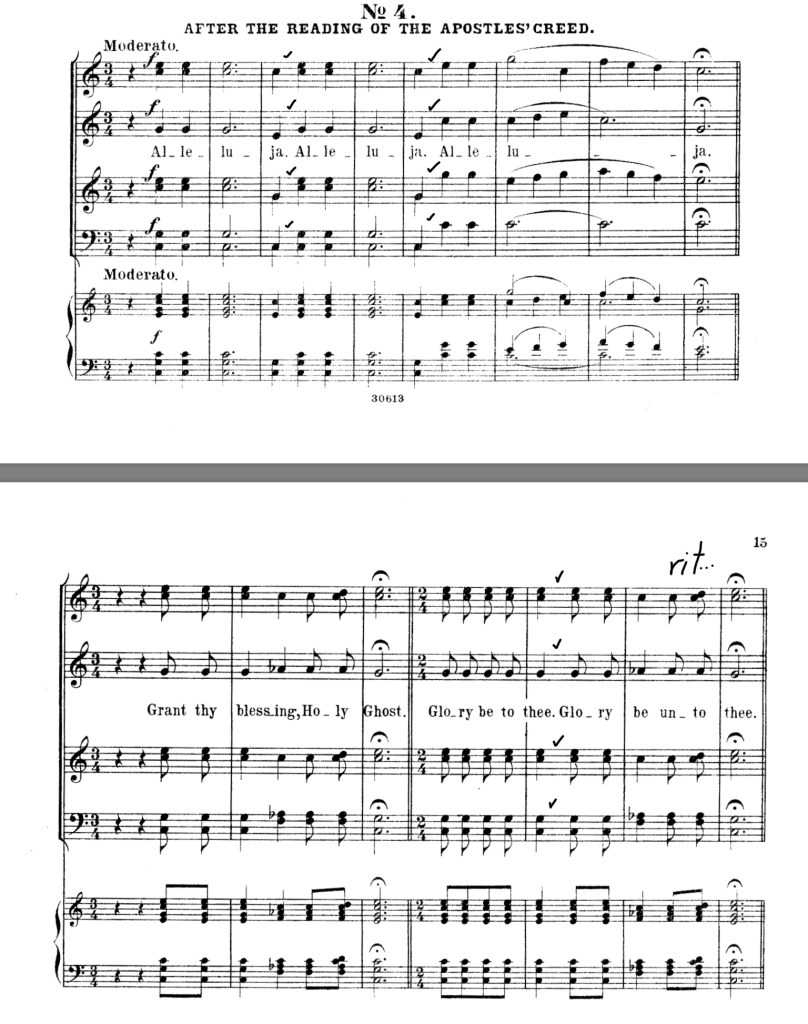
Liturgy of St. John Chrysostom by P. Tchaikovsky

By Aníbal Acevedo

In 1878 Tchaikovsky wrote a letter to Von Meck where he tells her how great he felt attending the regular Sunday Eucharistic celebration, and how he wanted to contribute writing music that will honor the most beautiful and important (as he mentioned) Liturgy in the Eastern Orthodox Church. Tchaikovsky thought that previous sacred composers (Bortniansky and Berezovsky) did an excellent job with texts, although their music was a little boring, and even though they followed the correct structure and style, it was time to make changes that allowed a different input. At the time, all musical compositions were under the so- called Monopoly of the Imperial Court Chapel, and it had to go under the music director’s approval to be published and presented, but according to Tchaikovsky, Jurgenson found a way to go around this impediment. This work is considered to be the first compendium of sacred music by an independent Russian Composer, and of course, for the monopoly that had been in place for the last two centuries this was unacceptable. After two months, Jurgenson decided to publish this work under the guice of a book, rather than a musical score, then filed approval in a different entity away from the Chapel and the people that were against it, but a couple of months later, in September of 1879 when they began printing, the Director of the Imperial Chapel intervened and confiscated more than a 140 prints; Jurgenson sued and won the trial. It is fair to say what a bold move this was, since the Liturgy had been premiered in a Chapel (with a worship setting) and Jurgenson claimed that the imperial Court Chapel had no business supervising the musical execution. The Liturgy was being performed more and more (1880) each time gaining new audiences who were both amazed and in disagreement with it. Ambrose, the Vicary, expressed his discontent saying that it was a sacrilege the way Tchaikovsky was using the high register, and some other comments on how it was too Italian-influenced. His composition was performed mostly outside Church, since it was approved by the Office of Censorship but not by the Court Chapel or its director, which allowed audiences to applaud and celebrate its magnificence. From here on, this important work helped defeat the Chapel’s Monopoly and set a new record that exhorted other composers to do the same, but Tchaikovsky’s Liturgy had a long way to go before it was properly liturgically performed again.

Musical Structure
Tchaikovsky wanted to maintain the standards of Orthodox Chorale a cappella music, and tried his best not to go far from it, taking the traditional Slavonic chants and presenting them in blocks of chords moving in the same direction (for the most part) with the occasionall imitation and polyphony shown in 2 of the 15 movements. The text is strictly taken from the Divine Liturgy of St. John Chrysostom in Russian, and it’s 50 minutes long.
The recurring way of how he used the higher register is just like any climax in an Opera (aria, ensemble or chorus), and as the Liturgy became well known, people talked about how this could be a distraction for eucharistic purposes, but in reality, it set a great contrast considering the simplicity and stillness of the whole pice, and above all, brought light and greatness to the composition. If we take under consideration his personal life, his failed marriage, and the nervous breakdown, we may say that the Liturgy was a vehicle to bring stability to this rough period.

References

Greenfield, Philip. “Horizons: Sacred Choral.” American Record Guide 83, no. 1 (January 2020): 190–91. http://search.ebscohost.com/login.aspx?direct=true&site=eds-live&db=asn&AN=140408731. Accessed 15 May 2020.

Highben, Zebulon M. “Defining Russian Sacred Music: Tchaikovsky’s ‘Liturgy of St. John Chrysostom’ (Op. 41) and Its Historical Impact.” The Choral Journal, vol. 52, no. 4, 2011, pp. 8–16. JSTOR, http://www.jstor.org/stable/23560599. Accessed 15 May 2020.

Von Meck’s and Tchaikovsky’s Correspondence

Pyotr Tchaikovsky and Nadezdha Von Meck had shared lots of correspondence between the years of 1866 and 1868. What originally started as letters asking for commissions evolved into much more. As the letters kept going back and forth, this relationship went from a composer-client negotiation to a very close friendship. While still asking for commissions and talking about music, Tchaikovsky and Von Meck wrote about each other’s daily lives, families, personal beliefs, travels, special events, and emotions. However, while the correspondence formed a beautiful friendship, it may have also helped develop some intimate feelings from Von Meck towards Tchaikovsky. He viewed Von Meck as a really close friend while she may have seen him differently. Her choice of words and writing style demonstrate a hidden meaning of love and intimacy towards the composer.

Von Meck had been recently widowed when the correspondence started, and she was introduced to Tchaikovsky through The Tempest. Nikolay Rubinstein suggested she should commission music from him. The letters first started off as business negotiations and money matters between the two. In Letter 13, she then suggested that their correspondence should come from an inner urge and should not always be about business. This is a rather odd thing for a client to do, but eventually they start writing about things that did not have to do with money. Von Meck was thankful for the dedication for his symphony that she eventually refers to as “theirs,” and she was very sympathetic about what he was going through. In Letter 33, she appreciates that Tchaikovsky understands her and sympathizes with her. She explains that although she would love to run away with him, doing so requires freedom and so much more. Also, she states that her life is nearly done and he deserves peace and health. She worries about him and in him she treasures a lot of things. Her concern for him is all in self-interest. She questions why Tchaikovsky won’t tell her about his state of mind, considering she loves him and cherishes their friendship. After Tchaikovsky wrote to Von Meck about his unhappiness with his wife in Moscow, she wrote back to him. In Letter 35, she expressed how she was happy that Tchaikovsky was getting some freedom from his marriage. She also writes that she would have done the same since she understood his feelings. She asked why he worries so much about money, and she also states how he’s given her so many happy moments and she really cares about him. They get to know each other more. They discuss things such as taste in music, thoughts on religion, idealism vs realism, and more. Von Meck was a realist, and it would have made sense for her to prefer the music of the realist Musorgsky and not the music from a man who hates realism. However, she preferred Tchaikovsky’s music over his. In fact, her praise for him and his music is exaggerated at times. In fact, in letter 208 after receiving the vocal score for Eugene Onegin, she expresses how listening to his music makes one’s being feel something grand. While Tchaikovsky’s music is great, the way she explained how it made her body react is quite unique, to say the least. In her final letter to Tchaikovsky, she concluded with “Goodbye, my dear, incomparable friend. Do not forget one whose love for you is infinite.” Infinite is quite the interesting adjective to use to describe a close friend.

At the time the letters started, Tchaikovsky was 36 and unmarried. As a friendship began to bloom through their letters, Tchaikovsky decided to dedicate his Fourth Symphony to her for being a good friend. It was also this time that Tchaikovsky started having issues with his wife. He proceeded to write to Von Meck about his terrible time with his wife in Moscow. After getting Letter 35 from Von Meck, Tchaikovsky decided that he could rely on her not just for money, but for sympathy as well. Once Von Meck wrote that she would regularly provide for him financially, he saw her as a mother figure. In Letter 80, Tchaikovsky states how he wants to comfort her the same way she comforts him whenever he’s in a bad state of mind. Like a child in its mother’s arms, he goes to her for comfort after any bad situation because that’s how he feels about their friendship. He hopes she will remember him as the friend who loves her during her hardships. In Letters 84 and 119, Tchaikovsky wrote to Von Meck, assuring her that he is writing to her not out of force, but to satisfy his heart’s need and, and writing to her provided him with pleasure. It’s great to know Tchaikovsky really cared for Von Meck as a great friend even when she feels he shouldn’t care for her that much.

One of the letters I found interesting was Letter #13. This letter was from Von Meck to Tchaikovsky, and this was written from Moscow on May 2, 1877. She thanked Tchaikovsky for the dedication of the Fourth Symphony to her. She refers to herself as a close friend who loves him very much. Von Meck also says she hasn’t gotten his answer regarding being able to write to each other from an inner urge and not just talk about business. She states that she needs him, “the pure minister of my beloved lofty art,” and she will feel bliss if he agrees to this. She feels his dedication to her is welcome and precious. I found this letter interesting because it feels like the first time a sense of intimacy is present. At this time, she is not aware of Tchaikovsky’s homosexual tendencies. Also, her choice of words is rather interesting. For example, referring to him as the pure minister of her beloved lofty art makes it sound like she has or is now developing feelings of love and intimacy for him. 

Another letter that grabbed my attention was Letter #57. This letter was from Tchaikovsky to Von Meck, and it was written from Vienna on December 9, 1877. In this letter, he wrote that he avoided going to a grand Philharmonic concert that would feature Schumann’s Third Symphony. He wanted to avoid meeting musicians and socializing with them. Also, he hated how other musicians would act in a condescending manner towards any Russian musicians. He described it as the musicians putting on a fake, polite face and being extremely polite, and he could see right through it. Tchaikovsky also wrote about the war news and how he felt about how “the Turks had captured Elena.” This letter struck me as interesting because it’s sad how Tchaikovsky’s anthropophobia would cause him to miss a performance of one of his favorite symphonies. Also, he brings up the perspective of Russian musicians being looked down upon by other musicians, which is a unique and not one I thought would be real. Lastly, it is nice to hear of his opinions that do not necessarily have to do with music, even if they are about a subject as grim as war.

The correspondence between Tchaikovsky and Nadezhda Von Meck presents a closer, more personal look at how these two individuals lived their lives. What started off as just seeking commissions evolved into a great friendship between the two. Tchaikovsky dealt with many emotional struggles (some which prevented him from participating in things he wanted to do), and he would get comfort from Von Meck. She had endless love for Tchaikovsky, always worrying about him, praising him to the extreme, and wanting to know everything about him. While this correspondence only lasted two years, it was a great 2-year emotional outlet for them.

Omar A. Cordova

Bibliography

Tchaikovsky, Pyotr, and Nadezhda von Meck. To My Best Friend: Correspondence between Tchaikovsky and Nadezhda von Meck 1876-1878. Trans. Galina von Meck. Ed., Edward Garden and Nigel Gotteri. Oxford: Clarendon Press, 1993.

Tchaikovsky’s Piano Trio in A Minor, Op. 50

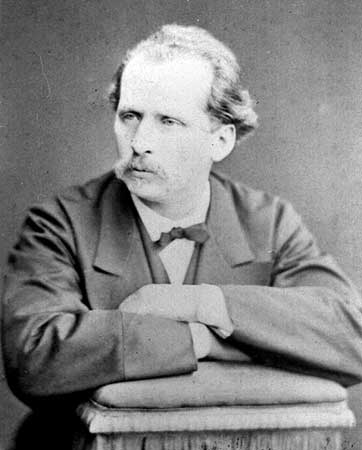
“To the memory of a great artist.” Nikolay Rubinstein 1835-1881

The piano trio, originally written as a harpsichord obligato with string accompaniment in the late Baroque era, later evolved to have a more prominent keyboard part and an important violin dialogue. Beethoven and Schubert pushed the role of cello in the piano trio from one of accompaniment to one of prominence. Though some piano trios of the 19th century may favor the keyboard, the general trend moved toward composing with brilliance in all three parts. Tchaikovsky’s Piano Trio in A Minor falls squarely into the virtuosic category and requires excellence from each musician.
Tchaikovsky disliked the genre of piano trio, suggesting that the sound combination of piano and string instruments was unpleasant and unnatural. However, he decided to set himself to the task in December 1881. By January 1882, Tchaikovsky finished his Piano Trio in A minor and was pleased with his composition. He dedicated the trio to Nikolay Rubinstein (who died unexpectedly from tuberculoses in March 1881) with the words, “To the memory of a great artist.”
Tchaikovsky’s Piano Trio in A Minor is unusual in that is has only two movements instead of the typical four. The first movement is in sonata form. The second movement is a theme and variations with a finale and coda.
The first movement begins in A minor, with the cello and then the violin presenting the mournful melody. The piano takes a turn with the theme before moving into the second theme (written in E major.) The second theme feels more hopeful, and it is developed between all three instruments. The development, which begins in A minor, takes us through our recognizable themes and uses motives and sequences to take us through a chromatic shift in keys from B major, B flat Major, then A major. The effect is both emotional and warm. As expected the main theme returns in A minor. To end this movement, the harmony stays on an A minor pedal while the music almost fades out. The themes in this movement could be described as heartbreaking, beautiful, and even tender, which seems fitting for an elegy.
The second movement begins with an introduction to the theme in E major, which was inspired by Tchaikovsky’s memories of a pleasant day spent with Rubinstein and friends in a scenic part of Moscow. Solo piano lends simplicity to the introduction, creating a pastoral feel. There are 11 variations, followed by a Finale and Coda. The variations include a waltz, a fugue, a mazurka, and textures run from light and fanciful to orchestral at times. Each variation feels like a captured memory. The finale begins in A major, and is playful and upbeat with an almost frenetic energy about it. All three instruments interplay and exchange throughout the finale, weaving the motive from the first variation into the hopeful music. The frantic energy rushes into heavy A minor chords that lead into the coda. Here, the main theme from movement 1 returns. The piano plays huge, dramatic chord and scale passages while the cello and violin play the mournful melody in unison. The passionate coda dissolves into a funeral march-like ending and the piano fades out playing octaves alternating on I and V.
Tchaikovsky’s Piano Trio succeeds in showing all three instruments to advantage, never leaving one to fill a purely accompanistic role for long. His melodies are expressive and beautiful. As a tribute to a dear friend, the piano trio effectively paints a picture of deep and heartfelt emotion. Its virtuosity will appeal to musicians and audiences, and is an impressively gorgeous work in the piano trio canon.

Andrea Davis

Listen to Tchaikovsky’s Piano Trio in A Minor, Op. 50:

Bibliography
Brown, David. Tchaikovsky: The Man and His Music. New York: Pegasus Books, 2007.

Tchaikovsky Research contributors, “Piano Trio,” Tchaikovsky Research, , http://en.tchaikovsky-research.net/index.php?title=Piano_Trio&oldid=68581 (accessed February 27, 2020).

Tilmouth, Michael, and Basil Smallman. “Piano trio.” Grove Music Online. 2001; Accessed 27 Feb. 2020. https://0-www-oxfordmusiconline-com.lib.utep.edu/grovemusic/view/10.1093/gmo/9781561592630.001.0001/omo-9781561592630-e-0000021647.

Wiley, Roland John. “Tchaikovsky, Pyotr Il′yich.” Grove Music Online. 2001; Accessed 27 Feb. 2020. https://0-www-oxfordmusiconline-com.lib.utep.edu/grovemusic/view/10.1093/gmo/9781561592630.001.0001/omo-9781561592630-e-0000051766.

Grand Sonata in G, Op. 37

Tchaikovsky’s Grand Sonata in G, Op. 37 was written in Spring 1878 at his sister’s estate at Kamenka. It is four movements long, and the movements are as follows: Moderato e risoluto, Andante non troppo quasi Moderato, Scherzo/Allegro giocoso, and Finale/Allegro vivace. A performance of this Sonata would last about 30-35 minutes.

How did the sonata come to be? The first reference found was in a letter to Anatoly Tchaikovsky in March 1878. He stated that he was working on a piano sonata, but that it was not easy, and he has had little to no enthusiasm to work on it. However, he had hoped that down the line, he would find the spark that would make the process easier. What is interesting is that he did get the spark, but not for the sonata. Instead, he got an idea for a violin concerto (which would turn out to be Violin Concerto in D major, Op. 35), so he put the sonata off to the side. Correspondence after this would only talk about the concerto.

When he got to Kamenka in April, he committed to working on the sonata once more. He had written to Nadezhda von Meck that he was working on the sonata, and he wrote to Anatoly later on, saying he had finished three movements of the sonata and some other pieces. Around late May and early June, he wrote a letter to Nadezhda to confirm he was done writing the Grand Sonata as well as many other pieces, but it would take a while to get them all in order. The sonata would begin to get put in order and copied out in June. The first performance was in November 1879 by Nikolay Rubinstein at a concert for the Russian Musical Society, and it was first published in 1879 by Pyotr Jurgeson. The Grand Sonata is dedicated to Karl Klindworth (1830-1916), a German pianist, conductor, and teacher whom Tchaikovsky met back in 1868.

This piece was well-received in Russia, but it is basically unknown to the rest of the world. It is a difficult piece of piano literature to perform. Tchaikovsky was not the best piano player, and used the piano more to compose than to perform. It may be assumed that the sonata was well received because of Rubinstein’s performance of it, rather than the composition itself.

The first movement of the Grand Sonata is Moderato e risoluto. It is in G major, it is 301 measures long, and it is in sonata form (exposition-development-recapitulation-coda). It is the longest movement in the sonata with a duration of around 11 minutes. Overall, this movement is very pesante, homorhythmic, and thick in texture. It is also almost at fortissimo or on the loud side of dynamics. The movement starts off with block chords that feel orchestral at the beginning, and they are at fortissimo. The rhythmic figure of the dotted eighth-sixteenth gives forward motion to the music. There are some moments, whether it’s subtle or actually developed, where the music steps away from this. For example, the rubato section in the exposition actually demonstrates melody in stepwise motion as opposed to just block chords. The tranquilo section (3:00) is my favorite part of this movement as there is more contrast being shown with the dynamics; the melody is gorgeously moving and brought out due to the thin texture, and the rhythmic activity is actually enjoyable and has a purpose of bringing the melody out. Also, the rhythmic activity here is not needlessly frantic. This is my least favorite of the four movements. I feel like after the first 8 measures, I’ve pretty much heard the whole movement. It’s a shame because the lyrical stuff is beautiful and written in such a genius way, but it gets covered up with the frenzied motion and the thick textures.

The second movement is Andante non troppo quasi Moderato. It is in E minor, it is 152 measures long, and it is in ternary form (ABA’-coda). It is the second longest movement with a duration of around 9:30 minutes. This is, without a doubt, the most expressive movement in the entire Grand Sonata. It starts off in 9/8, thinner in texture, cantabile, and it lets the somber harmonies sink in to the listener. This movement also does a great job of balancing different styles and demonstrating contrast in dynamics and articulation. The B section switches to the key of C major, and this brightens up the somberness presented by the A section with its tonality of E minor. It plays around with its chromaticism in its rhythmic activity. It’s also higher in tessitura, and this brings brighter colors to the sound. As the B section develops, it gives the listener a false sense that they are in the A’ section. It has phrases and sounds reminiscent of the A section, but it’s embellished. It is pianissimo, and as it finishes, it has the instruction of morendo and perdendosi as the LH plays an inverted E minor chord. This movement does a great job of demonstrating different emotions, and it sounds like its own tune when compared to the other 3 movements. This is my favorite movement from the entire sonata.

The third movement is Scherzo/Allegro giocoso. It is in G major, it is 217 measures long, and it is in ternary form (ABA’-coda). It is the shortest movement in the sonata with a duration of around 2:20 minutes. It starts off in 6/16, and the melody is frantic. Though it is in G major, the harmony with some chromaticism makes it feel a bit unstable. The dynamics in this movement feel like swells. It starts off in mf, and it will do slight crescendos to forte or slight diminuendos. When it gets to the B section, the key switches from G major to its chromatic mediant, Eb major. The melody is still frantic, but now it alternates back and forth between ranges, unlike in the A section where the RH would stay in the treble clef and the LH in the bass clef. When it gets to the coda, the style slightly changes to staccato, and the melody is not as frantic. The dynamic also diminuendos. I find this movement to be average. It’s meant to be fast, and I do appreciate how chromaticism was thrown in to keep me guessing where the tonal stability will lie. However, it just sounds like a shorter variation of the first movement to me.

The fourth and final movement is Finale/Allegro vivace. It is in G major, it is 484 measures long, and it is in rondo form (ABACABA-coda). It is the third longest movement in the sonata with a duration of around 6 minutes. It starts off in 2/4 with block chords like the first movement, then it goes into the frantic melody like the third movement. When it gets to the B section, the music gets a little thicker in texture as the melody is then accompanied by harmony. The music gets homorhythmic here; it’s staccato, and it’s at mezzoforte. The dynamic experiences a number of subito changes. As the music starts heading into the A’ section, the dynamic changes to piano, the texture becomes polyphonic and thinner. Then it starts getting thicker and louder to prepare for the A’ section. Getting into the C section, it is much more expressivo, and the harmony switches back and forth between the melody and the accompaniment. It is also now in the key of Eb major, and the rhythm is much more relaxed. As it develops, the music becomes legato and starts moving either by arpeggios or by stepwise motion, then it starts heading back to how it was at the beginning of the section. As it approaches the A’’ section, the chords thicken and the dynamic goes to fortissimo while the melodic line ascends and descends. The bridge into the coda uses homorhythmic patterns and a rising melody before it comes descending into the chords. As it descends, the RH is right on the downbeats while the LH is on the upbeats (27:58). Leading into the coda are D major chords in different inversions and registers. With the coda, there is a sense of relaxation as the rhythm is calmer at first using eighth notes. The LH has ostinato eighth notes in the bass with chords on top of it, and the RH plays the melody in octaves. As the coda comes to an end, the RH evolves to playing the chords, and so does the LH to the point of it being homorhythmic at the end. This movement is more expressive than the first and doesn’t rely much on homorhythm. It has more of a dancing feel to it. It has more dynamic contrast and more style changes. It has more polyphonic lines and has more arpeggios and stepwise motion. This is more of how the first movement should have been, However, I still prefer the second movement over this one.

The Grand Sonata in G, Op. 37 had issues getting composed as Tchaikovsky could not find the inspiration to write it, and some of that shows in the piece itself. Once the 4-movement sonata was finished, it was then performed and received local praise, but that was due to the performer’s ability and not due to the sonata itself. While there are definitely some good hidden qualities in the composition, it feels like it takes one idea and just repeats it throughout while not developing it in interesting ways. There is no sure answer as to why this piece is obscure outside of Russia. It may be due to its repetitive ideas or it may be due to the difficulty at which it could reach. Either way, this piece will not get that answer until it is explored more by pianists.

Omar A. Cordova

Bibliography

“Grand Sonata.” Grand Sonata – Tchaikovsky Research. Accessed February 19, 2020. http://en.tchaikovsky-research.net/pages/Grand_Sonata.

“Grand Sonata, Op.37 (Tchaikovsky, Pyotr).” IMSLP. Accessed February 19, 2020. https://imslp.org/wiki/Grand_Sonata,_Op.37_(Tchaikovsky,_Pyotr)

Nikolov, Dimitar N. “Peter Ilyich Tchaikovsky’s Grand Sonata in G Major, Op. 37: A Critical Reevaluation.” Order No. 3117803, The University of Nebraska – Lincoln, 2003. http://lib.utep.edu/?url=/docview/305310033?accountid=7121.

Design a site like this with WordPress.com
Get started